Our Last Steps Home

Follow us on Facebook and Twitter

By Mark Lundegren

DSC_0661-Edit~2

My title might sound like the beginning of a novel, or the end of a travelogue. Instead, I intend it to introduce an important and often greatly neglected principle or tool for promoting optimal architecture, community design, urban planning, and societal energy use – special care with how we think about, design, and thus must cover the final steps, say 100 or so, to reach our homes and other neighborhood buildings.

As a practical matter, and as a foundation for more conscious architecture and design, there are two basic ways we can take or cover our last steps home. First, we can take them ourselves, on foot, here including using bicycles and other personal mobility aids. Second, we can finish these final steps home in vehicles – in cars, motorcycles, and the like.

13466126_955973881188950_3267108953909567158_n

This idea might seem obvious, and yet almost no one thinks about it today, including many architects and planners, whereas we, and they, all should. Why? Because the way we take our final steps home significantly determines the basic design and character of our neighborhoods and surroundings – including their scale, their livability, their inherent healthiness, their initial cost, their ongoing resource demands, and their ecological impact.

As my photo above of Serthar Larung Gar in Tibet highlights, when communities are designed so that we take our last steps home on foot, this can greatly change the form and nature of our houses, neighborhoods, and larger communities, compared with designing for the option, or requirement, of covering this final distance in vehicles. Roadways can shrink to footpaths, large labor-intensive yards become superfluous, noise is appreciably reduced, and the natural intrusion and hazard of moving vehicles is eliminated.

slide1Experientially, when the idea of walking our last steps home is part of neighborhood design, our houses and surroundings reliably become rehumanized and far more intimate. Fewer resource are required to create and maintain them. And the density of our neighborhoods can double or more, with no loss of indoor and outdoor living space per home – reducing sprawl, and the ecological harm and health risks associated with sprawl.

Our residential settings in turn become naturally healthier when they are pedestrian-focused – by requiring and thus encouraging adequate walking, by increasing social interaction, and by reducing anonymity and the resulting potential for both increased disaffection and crime.

slide2But what about our vehicles? We still can have them, and of course still need them, directly or indirectly, to support modern living. But by leaving vehicles in small lots 100 steps or so from our homes, or otherwise relegating them to the edge of our neighborhoods, we can transform and greatly improve our communities and quality of life, and in category after category as I have suggested.

I’ve included two sets of photos contrasting pedestrian and vehicular-based neighborhoods to underscore these crucial points, and would encourage you to think more deeply, and more often, about our last steps home – as you plan, design, build, or choose the places where you and others will live. Let me know what you think in the comments section below.

Mark Lundegren is the founder of ArchaNatura. 

Tell others about ArchaNatura…encourage modern natural design!

Photos: Wikimedia

Natural Mechanicals Made Easy

Follow us on Facebook and Twitter

By Mark Lundegren

DSC_0661-Edit~2

Building natural shelters is fairly easy. It’s an innate, or quickly learned, human ability.

With some basic training and a bit of perseverance, most of us can gather materials from the environment and produce sheltering structures that are not only physically sound, but even ones that are often elaborate and quite stunning. This link will take you to some great examples – and again, ones that are within the reach of nearly all of us.

But erecting modern natural buildings is another matter, and a far more complex undertaking. And this is especially true when we define modern natural buildings as not just using natural materials or working with natural landscapes, but also as being wholly or partially off-grid, or having some degree of autonomy or independence from traditional – and unnaturally centralized – utility systems (see Wikipedia Autonomous Building).

In practice, the at once old and new demand of building autonomy often requires far more careful consideration of the building’s mechanical systems than in the case of utility-connected buildings. Unless our budget is unlimited and we can tolerate significant inefficiency or redundancy, autonomous building today almost invariably involves a fairly intricate weaving or orchestration of a building’s mechanical systems.

Modern Natural Building Systems Overview

Of course, the primary driver of the added complexity of modern buildings, at any level of autonomy, is that we ask all modern buildings – whether serving as homes, businesses, or for other uses – to do more than simply shelter us. We want or expect modern buildings to heat, cool, and light our lives. We expect they will keep us and our possessions safe, and even warn us of threats and hazards – from outside the building and within.

We expect modern buildings to power our appliances and tools, and to aid our modern lifestyles more generally. We want our buildings to advance our goals, to make occupants and visitors comfortable, and to fulfill social mores and expectations. And we expect many buildings to be at once restful and enlivening places, settings where we can renew or enjoy ourselves amid the complexity and demands of modern life.

It’s a long list of essential building features for many, if not all, of us. And it is the complexity of modern building, and especially modern natural building, that tends to keep it out of reach for a great number of people. But this needn’t be the case. As I work to showcase through ArchaNatura, modern natural building can be greatly simplified and put within the reach of people of modest means, or ones dedicated to more natural, dematerialized, and intentional life.

Continue reading “Natural Mechanicals Made Easy”

Tiny, Mobile, Or Studio Home?

Follow us on Facebook and Twitter

By Mark Lundegren

DSC_0661-Edit~2In our changing, more globally conscious, and, for many, economically pressured times, material minimalism and ‘less is more’ thinking is decidedly in vogue – and this is particularly true as respects our housing choices.

Reducing our material footprint has many advantages, and the way we house ourselves is a principal factor determining the personal and collective mark we make on our planet, potentially leading to sprawl and ecological harm, or not.

Beyond improved ecological sustainability for us all, at a personal level material downsizing and the move to intentionally smaller and lower-cost homes can offer reduced stress, greater freedom, and even new happiness. In the latter case, this is through the ongoing opportunities for attentiveness, deliberateness, creativity, and joy from intentional or intrinsic living, qualities that small homes naturally and often unexpectedly foster.

Small Homes

Tiny, Mobile & Studio Homes – Opportunities To Explore Intentional Modern Living

In the move to smaller, more intentional living spaces, and leaving aside shared housing, three main strategies dominate – tiny homes, mobile homes, and studio homes. All have an appeal to those of us wishing to downsize, rightsize, or deliberatize the space we call home. But what are the relative advantages and disadvantages of each approach?

To explore this question, I’ll provide a brief overview of tiny homes, mobile homes, and studio homes, three housing options that similarly emphasize smaller material footprints and generally foster or require more intentional living. But perhaps more importantly, I will then provide a framework for thinking about these and other approaches to the way we house ourselves, perhaps helping and inspiring you to examine your own personal options for life that is more deliberate, created, joyful, and sustainable.

Continue reading “Tiny, Mobile, Or Studio Home?”

Green Walls Vs. Green Facades

Follow us on Facebook and Twitter

By Mark Lundegren

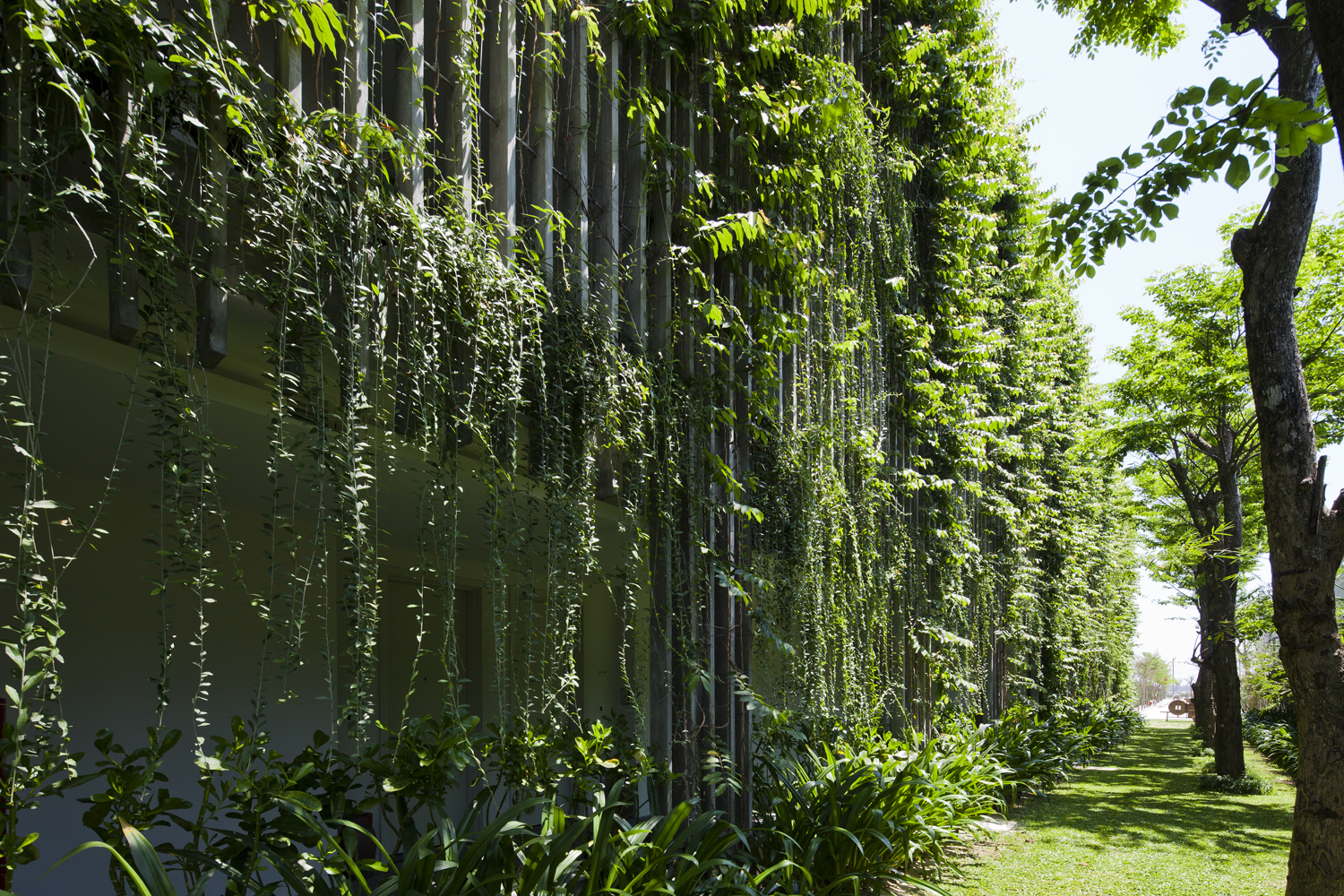
DSC_0661-Edit~2Plant-covered walls are a popular trend in architecture and design today, reflecting our natural need and desire to have living nature around us. But not all so-called living walls or vertical gardens are created alike. Because of this, understanding their basic variations can help us to design, build, or buy living walls more optimally and advantageously.

Owing to their two quite different basic designs – green walls and green facades – and the high number of potential variations on these designs, living walls should be viewed as an extremely flexible design tool. In practice, they can be employed: 1) with nearly any type of building, 2) as both interior and exterior walls, 3) with either edible or ornamental plants, and 4) on almost any budget.

06_green-facade

Living Wall Softens The Lines Of A Mid-Rise Modernist Hotel (LivinSpaces)

Indeed, after their initial construction costs, many living walls will steadily pay for themselves through superior building and environmental performance, in addition to offering strong and ongoing visual and psychological appeal.

Continue reading “Green Walls Vs. Green Facades”

Probing Essential Needs

Follow us on Facebook and Twitter

By Mark Lundegren

DSC_0661-Edit~2Before we can intelligently design and create – whether an invention, a building, or a life – we need a clear sense of essential needs or requirements to guide our actions. As has been said, we are wise to always begin with an end in mind. Without this context or frame of reference, we will tend to act and create haphazardly, and achieve beneficial results only by chance.

This idea is taught in most schools of design and engineering. And yet, the needs and requirements we uncover and pursue as creators can be superficial, far from essential or penetrating, and less apt to lead to true innovation or breakthroughs in human value. Too often, we seek, see, and fulfill only limited requirements or expedient outcomes. And thus, we leave or give to others the opportunity to see more fundamentally into life’s many needs and requirements, and the chance to surpass us and our work on the back of their deeper or more enduring insights.

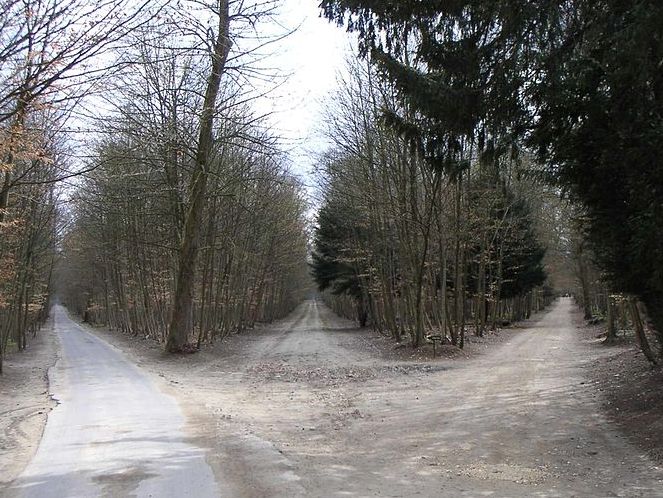
800px-La_route_qui_mène_vers_le_coté_obscur

Life Is Full Of Options, But Which – Or What – Is Most Essential?

There are of course countless examples of this – new designs, technologies, and products that radically upend existing and more narrowly or poorly grounded approaches – and I will leave you to pick your favorites. One of mine is the case of homebuyers, who often begin with very fixed ideas about the type of home they want, but often can be led in wholly new directions by exposure to alternatives that better understand and reflect or express their essential needs.

As I suggested, a way to see, design, create, and live more essentially, and thus more intelligently and innovatively, is to delve fundamentals – when approaching an immediate challenge or presented set of requirements, and more broadly. By extension, the ultimate expression of this process is to seek and pursue our or other’s most essential needs, in any area or across all areas of modern life and endeavor, and perhaps helping to re-create and eclipse how life is structured today entirely.

Continue reading “Probing Essential Needs”

AN Challenge: More With Less

Follow Us & Network on Facebook and Twitter

By Mark Lundegren

DSC_0661-Edit~2A key principle behind ArchaNatura is the idea that we can do more with less – and perhaps much more with much less – through more attentive design, new technologies, and creative uses of existing technologies (via new techniques).

The practical advantages of creating and functioning more generally with this goal in mind can be enormous, especially when our efforts are sustained and diverse. And this is true whether we are the creators or beneficiaries of the value-oriented new designs, technologies, and techniques that reliably result from the approach.

Steel Arch

How Might We Achieve Far More With Far Less Today?

In addition to immediate benefits from specific advances, a sustained more with less focus offers a number of practical advantages as a strategic approach or framework for work and endeavor of all kinds. First, it turns even seemingly mundane tasks into naturally engaging and meaningful opportunities for creative action. At the same time, the approach also tends to keep us grounded as creators and more likely to produce valuable, as opposed to merely interesting, breakthroughs.

Third, when sustained and probing, the approach can lead to innovations and learning that steadily and progressively build upon one another, or naturally compound, thereby tending to produce more frequent and important breakthroughs, compared with more piecemeal or less value-oriented approaches. And finally, by stressing resource efficiency and solution effectiveness, the approach naturally promotes greater modern sustainability.

Continue reading “AN Challenge: More With Less”

Modern Building With Y-Beams

Follow Us & Network on Facebook and Twitter

By Mark Lundegren

DSC_0661-Edit~2I’d like to introduce you to an alternative building technology of sorts, one called the Y-beam.

Y-beams are fairly easy to use, require no heavy lifting or specialized machinery, and almost always prove unexpectedly powerful when employed in building and design. In practice, Y-beams can be used by anyone and in any type of construction. Indeed, Y-beams even may be the most transformative, cost-effective, and simplifying design and construction technology ever created!

Stateway Gardens

Modern Building Created Without Adequate Y-Beam Use?

Now, you’ve probably heard of an I-beam already, which of course rhymes with Y-beam. But there the similarities definitely end. While I-beams are structural elements that have the shape of the letter “I” in cross-section, by contrast Y-beams have no particular shape. Similarly, while I-beams are usually rigid and straight, Y-beams are completely flexible and can be bent or molded to any design imaginable.

As a practical matter, Y-beams can be used during any phase or aspect of construction. But they are best employed early in the building process. By this, I mean at least beginning with site and foundation preparation, and ideally well before this – in the design and site selection process. On the other hand, perhaps the least desirable use of Y-beams is after project completion, even as this may be their most common use. That said, Y-beams can be successfully used in retrofitting or redesigning existing projects that were envisioned or built without them, or without enough of them.

Continue reading “Modern Building With Y-Beams”

7 Lessons For Natural Design

Follow Us & Network on Facebook and Twitter

By Mark Lundegren

DSC_0661-Edit~2The personal development writer Stephen Covey once recommended the habit of beginning with our ends in mind.

So often, in life and in the designs we create, we begin with the beginning only in mind, or only a few first steps – and not the end or full context and impacts of our actions.

To some degree, this is natural. It is genuinely difficult to predict our final ends or see our total impacts with high accuracy. But this fact does not counter the idea that we should clarify and pursue ends, rather than focus on beginnings and first steps. As we can validate for ourselves, there is real power in having our ends in mind before and as we act, even if they prove simplistic in hindsight and shifting over time.

Three Creative Attributes

Three Essential Qualities For The Mastery Of Creative Change

As a practical matter, to begin with our ends or outcomes in relatively full view, we require a few things. One is of course vision, a natural and practiced ability to imagine change and see how actions might unfold to produce change. This capacity to envision depends in part on comfort with expression and creativity, and in part on patience and a willingness to pursue the details of imagined change.

Continue reading “7 Lessons For Natural Design”

Wabi-Sabi: Beauty On A Budget

Follow Us & Network on Facebook and Twitter

By Mark Lundegren

DSC_0661-Edit~2Whether we are designers, building owners, or renting space, we all have a waiting, frequently overlooked, and remarkably flexible way to stretch our construction and furnishing budgets.

This nearly universal opportunity – literally to create money and materials from thin air – is waiting in front of all of our eyes. Or rather, it is waiting behind our eyes, in the way we use our eyes to look at the world.

The creativity-requiring but resource-leveraging design tool we have in mind is called Wabi-Sabi, which is a Japanese phrase roughly meaning naturally-aged. The term was coined to embody a design tradition that emerged from and is often favored by Japanese Zen culture, reflecting and embodying its special emphasis on attentive life. Importantly, however, this part aesthetic and part philosophical sensibility can be seen as a re-naturalized design or artistic outlook that has re-occurred in various forms across many human cultures and settings.

wabi-sabi cup

Naturally Elegant Wabi-Sabi Tea-Cup

If you are not familiar with Wabi-Sabi, the elegant but decidedly irregular tea-cup above will give you an immediate feel for and introduction to this old and important artistic tradition. It clearly highlights the Wabi-Sabi school’s special emphasis on seeing beauty in things that are natural and aged.

Over time, Wabi-Sabi art and design has become highly elaborated and, with this elaboration, sometimes quite expensive. But this needn’t be the case. In reality, beautiful and disheveled – or beautifully disheveled – and useful Wabi-Sabi objects are usually all around us, are often free or nearly free, and generally can be fashioned with just a bit of curiosity and creativity. All it really takes is an acquired and re-naturalized taste or artistic sense – one that sees natural objects and natural aging as beautiful.

Continue reading “Wabi-Sabi: Beauty On A Budget”

Examining Our Natural Curves

Follow Us & Network on Facebook and Twitter

By Mark Lundegren

DSC_0661-Edit~2This post is a re-print of an article I published on my Mark Lundegren blog, but thought it might be interesting to people who enjoy thinking about shapes and forms, and their power to alter our quality of life.

My title may have led you to think I was going to argue for or against Rubenesque body types, or discuss a fitness insight from my work for HumanaNatura. But I actually want to share a strategy insight and talk about the curves of our lives and groups, rather than those of our limbs and torsos.

Though few of us have considered the idea that our lives and social settings can have a distinct underlying curve or shape, these natural patterns do indeed exist and are discoverable by us. What we might call our life-curves are real and tangible reflections of the way we live and, in particular, how we pattern our actions against our progressive potential. In theory and practice, life-curves prove quite powerful, in the results they create for us,  and as a tool of personal and group strategy and aid to higher quality of life and functioning.

The Core Idea

The core idea of natural curves is that elemental patterns can be shown to underlie all of our lives, even as these patterns remain hidden to us. In essence, our personal life-curve is the overall direction that our life or life trajectory takes over time – again, against our progressive or developmental potential. In practice, understanding and seeing our life-curves is a lot like learning about climate. Like the larger conditions that span and influence the weather we encounter each day. life-curves are subtle but ever-present shapes behind the scenes, but ones that are equally accessible and even equally obvious once grasped.

Continue reading “Examining Our Natural Curves”