Using Too Much Space?

Follow Us & Network on Facebook and Twitter

By Mark Lundegren

DSC_0661-Edit~2When we look at the trouble and expense that people often go through – as designers, builders, or property owners – to create and maintain modern buildings, one obvious question that comes to mind is – are we simply creating and using too much space?

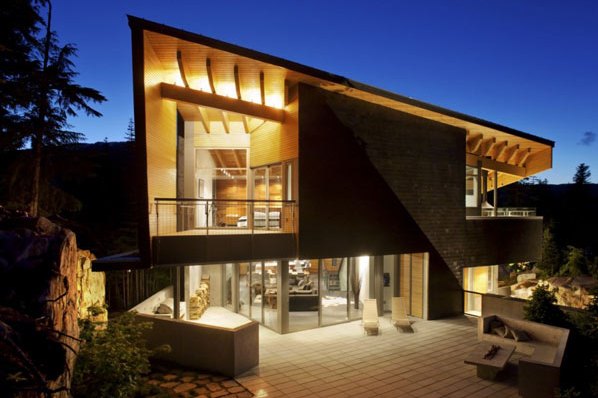
The decidedly spacious home below, apparently designed to evidence traditional chalet themes, offers a great case in point. The structure obviously cost a small fortune to build and hardly can be seen as a model for sustainable and generalizable modern building.
Buildings Lost In Space

Though striking aesthetically, the building has little alignment with the functional needs and economic constraints of a typical family, or relevancy to the ecological needs and constraints of a society seeking to halt environmental degradation and climate change.

As suggested, one way of bridging this gulf between modern aesthetic expression and our functional requirements is simply to build and use less space.

Though this idea may conjure visions of cramp and forbidding dwellings, or corporate cubicle farms, this of course needn’t be the case – with a bit of ingenuity and some rethinking of the way that we can and might use the space we create.

The 16 Hour Test

To help engender progressive thinking about modern building design and encourage work toward a synthesis of aesthetic, economic, and ecological considerations, I would like to introduce The 16 Hour Test.

Continue reading “Using Too Much Space?”

No Building Is An Island

Follow Us & Network on Facebook and Twitter

By Mark Lundegren

DSC_0661-Edit~2The idea that no building is an island may strike you as obvious.

And yet, our modern design and construction practices often treat each building as if it were an island unto itself…with designers, builders, developers, and building owners indifferent to and sometimes even contemptuous of each new projects’ surroundings and history.

It’s not hard to understand why this is the case. In this time of relatively unbridled and unexamined egoism and status-seeking, our norms and incentives encourage the creation of buildings that are different and even contrary to those around them – buildings designed first to produce esteem for their creators, rather than to enhance our naturally interdependent life together.

If Only Life – And Building – Were This Easy!

At the same time, the advance of construction, materials, and design technologies now allows many new building techniques and practices to be pursued. And whether for self-serving or more principled motivations, some of us are driven to use and test these new outer limits of design. But often this is done opportunistically or idealistically, and with little regard for the practical impact of our building experiments.

Continue reading “No Building Is An Island”

Cooling More With Less

Follow Us & Network on Facebook and Twitter

Can you name the two pieces of equipment in this photo, and describe how they relate to one another? If you live in a warm climate and occupy a smaller amount of space, chances are you will have little trouble with both parts of this question.

On the other hand, if you live in a colder climate, and have a larger, older, and traditionally-built home, there’s a good chance you may instead struggle with our question.

The Mini-Split

As you might have known already, the items in the photo to the left are the indoor and outdoor components of a small, two-part or “split” air conditioning system, commonly known as a mini-split.

Mini-split systems are commonly-used in many parts of the world, but are almost unheard of in other places. But this heating and cooling divide is changing, as building quality and energy efficiency standards improve, making mini-splits a logical choice in all but the coldest of climates.

Continue reading “Cooling More With Less”

New Life In An Old Idea

Follow Us & Network on Facebook and Twitter

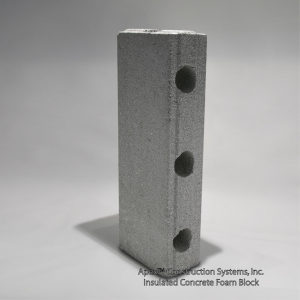
The building block has been around for a while. It arrived sometime after the thatched lean-to and hut, and long ago offered us a new, economical, and more protective way of building, especially as our early towns and cities formed.

Given ArchaNatura’s mission to promote progressive building and design, it might be a surprise that our first post would involve the seemingly lowly and decidedly retro building block.

After all, as a building material, blocks may be low-cost, but they are heavy, a pain to transport, and offer poor thermal characteristics. Blocks can shake apart in earthquakes and storms without added reinforcement. And in any case, they are labor intensive and fairly inflexible when complex building forms are desired. In a word, blocks have been done.

Continue reading “New Life In An Old Idea”

Anyone Out There?

Follow Us & Network on Facebook and Twitter

We’re just getting this new site going, but have the initial layout, support pages, and widgets in…feel free to have a look around.

Watch for refinement of the pages and our first posts beginning in October. In the meantime and as our post stream develops  your comments & suggestions are always welcome!

Health & best wishes,

– AN